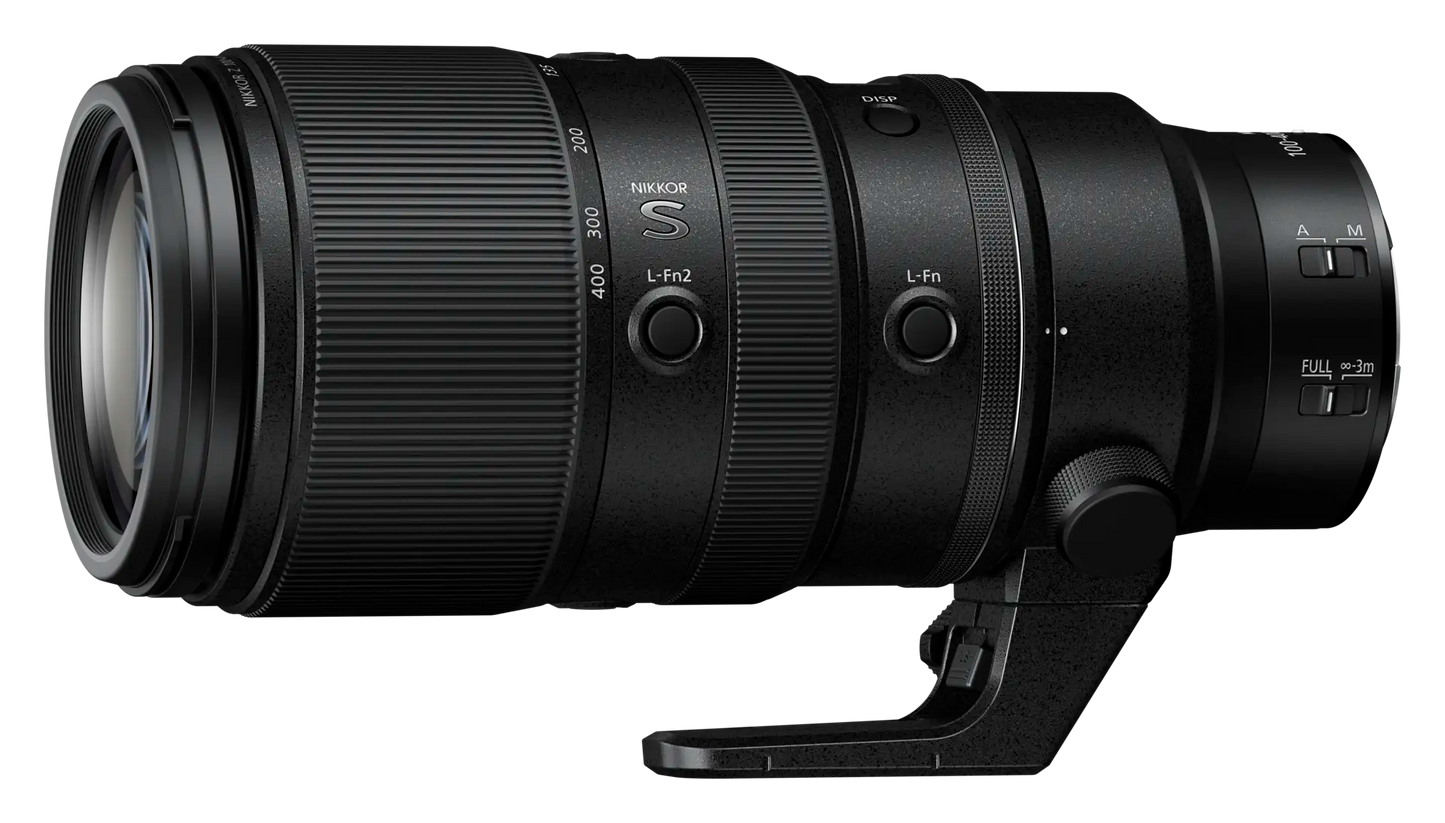
Nikkor 100-400mm
Nikkor 100-400mm
The 100–400mm is one of the most versatile wildlife lenses in my kit. It provides meaningful reach while remaining relatively portable, which makes it particularly useful when travelling or working in situations where carrying very large telephoto lenses is not practical.
In the field, this lens often becomes the default choice when I expect a variety of wildlife encounters at changing distances. The zoom range allows me to move from environmental wildlife images to tighter compositions without constantly changing lenses.
Although it is not as fast as a fixed-aperture telephoto, the optical performance is excellent and the reach up to 400mm makes it capable of capturing wildlife behaviour while maintaining strong image quality.
This balance between reach, flexibility, and portability is what makes the lens such a valuable tool on expeditions.
Key Technical Specifications
Lens Type
- Professional telephoto zoom lens for Nikon Z-mount mirrorless cameras
Focal Length
- 100–400mm telephoto zoom range designed for wildlife, sports, and nature photography
Maximum Aperture
- f/4.5–5.6 variable aperture
Optical Construction
- 25 elements in 20 groups
- Includes Super ED, ED, and SR elements to reduce chromatic aberration and maintain high sharpness across the frame
Autofocus
- Dual stepping motor autofocus system for fast, accurate and quiet focusing
Image Stabilisation
- Built-in Vibration Reduction (VR) providing up to 5.5 stops of stabilisation
Minimum Focus Distance
- 0.75 m at 100mm
- 0.98 m at 400mm
Maximum Magnification
- 0.38×, allowing relatively close focus for a telephoto lens
Filter Size
- 77 mm
Build
- Professional weather-sealed construction designed for demanding outdoor environments
Weight
- Approx. 1,355 g
Why It Earns Its Place in My Field Kit
Wildlife photography often requires adapting quickly as animals move or behaviour unfolds unexpectedly. The 100–400mm gives me the ability to respond without needing to switch lenses or reposition constantly.
It offers enough reach to isolate subjects effectively while remaining portable enough to carry across long days in the field. That combination of reach, flexibility, and reliability is what makes it a core part of my expedition kit.
Share