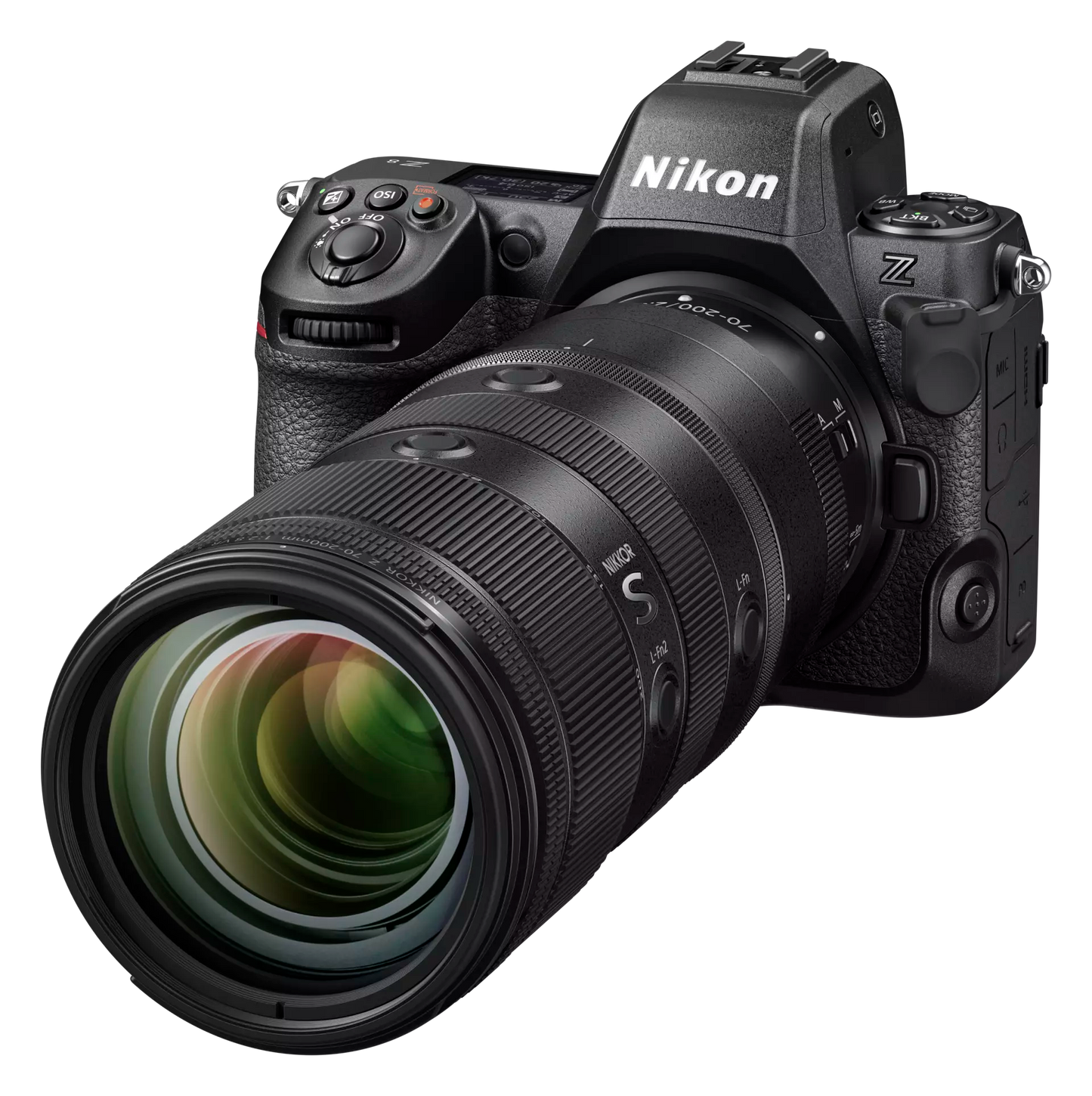
The 70–200mm sits at the heart of my wildlife kit. It offers the reach needed to isolate subjects while still allowing enough flexibility to respond quickly when distance, behaviour, or composition changes.
It’s a lens I use constantly in the field — particularly when working with wildlife that allows a closer approach or when the surrounding environment is important to the image. The focal range gives enough compression to create strong subject separation while still retaining context and atmosphere.
The constant f/2.8 aperture performs reliably in difficult light, particularly during the early mornings and late evenings when much of wildlife activity occurs. Combined with fast autofocus and excellent optical sharpness, it allows me to react quickly when moments unfold without warning.
In practice, this lens strikes a balance between reach and versatility, which is why it remains one of the most dependable tools in my field kit.
Key Technical Specifications
Lens Type
- Professional telephoto zoom lens for Nikon Z-mount mirrorless cameras
Focal Length
- 70–200mm telephoto zoom range
Maximum Aperture
- Constant f/2.8 aperture for low-light performance and subject isolation
Optical Construction
- 21 elements in 18 groups
- Includes ED, Super ED, and SR elements to minimise chromatic aberrations and maintain sharpness across the frame
Autofocus
- Dual stepping motor autofocus system for fast, accurate and quiet focusing
Image Stabilisation
- Built-in Vibration Reduction (VR) providing up to 5 stops of stabilisation
Minimum Focus Distance
- 0.5 m (at 70mm) / 1.0 m (at 200mm)
Maximum Magnification
- 0.2× reproduction ratio
Filter Size
- 77 mm
Build
- Professional weather-sealed construction designed for demanding outdoor use
Weight
- Approx. 1,360 g
Why It Earns Its Place in My Field Kit
Many wildlife encounters happen at distances where a standard lens cannot isolate the subject effectively, but where very long lenses can feel restrictive. The 70–200mm sits perfectly in that middle ground.
It allows me to work quickly, adapt to changing distances, and frame scenes with precision. The result is a lens that delivers both technical reliability and creative flexibility — which is exactly what you need when working in unpredictable environments.