Tax included.
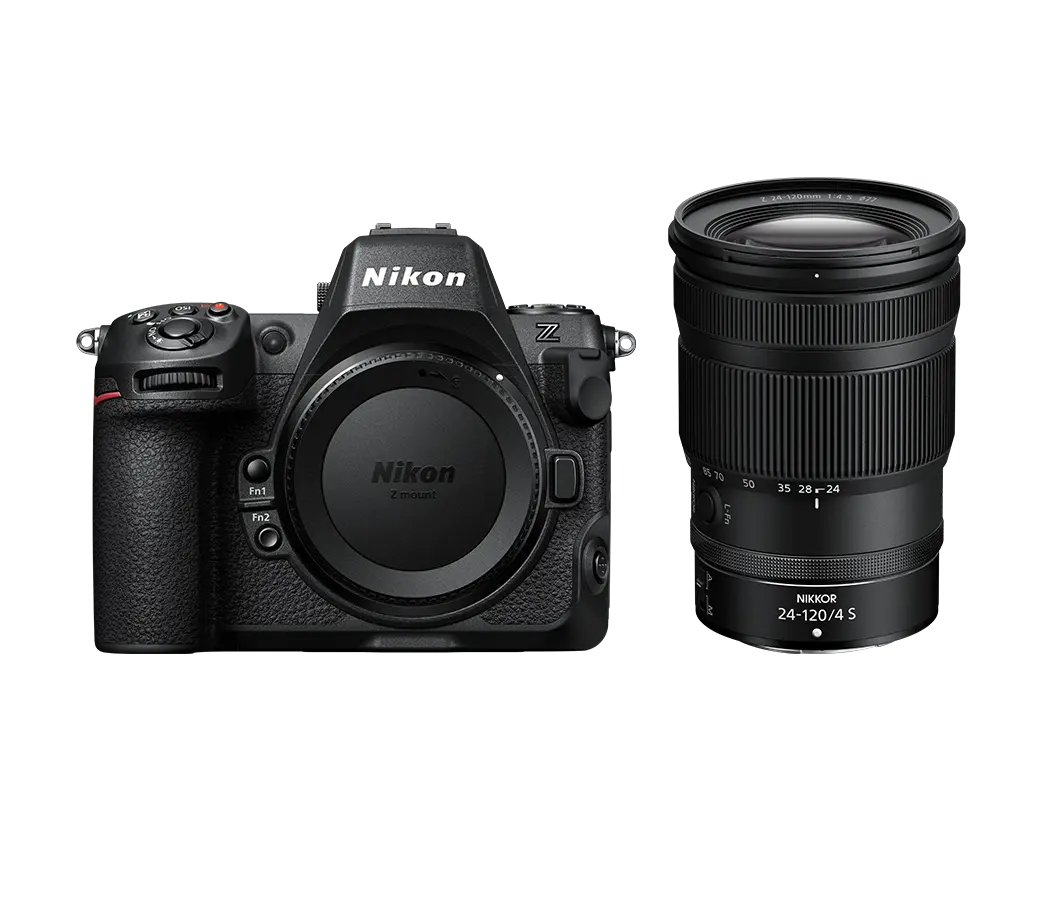
Nikon Z8
The Z8 is the camera I rely on for most of my wildlife photography in the field. It delivers the speed, reliability, and image quality required when working with unpredictable subjects in remote environments where moments are brief and rarely repeat.
In practical terms, the Z8 brings flagship-level performance into a smaller body that is easier to carry on long days in the field. Fast autofocus, high frame rates, and excellent low-light capability allow me to react quickly when behaviour unfolds—often at first or last light when wildlife activity is at its peak.
It has proven dependable across varied conditions, from dust and heat to cold early mornings, which is ultimately why it remains a core part of my expedition kit.
This is not a beginner camera. It is designed for demanding photography where speed, tracking accuracy, and image quality all matter simultaneously.
Key Technical Specifications
Sensor & Image Quality
- 45.7 MP stacked full-frame CMOS sensor
- Maximum resolution: 8256 × 5504
- ISO range: 64 – 25,600 (expandable to 32 – 102,400)
- 14-bit RAW (NEF), JPEG, and HEIF image formats
Speed & Performance
- Up to 20 fps continuous shooting in RAW
- Up to 30 fps full-resolution JPEG
- Up to 120 fps in high-speed burst modes (reduced resolution)
Autofocus
- 493-point hybrid phase-detect autofocus system
- Advanced subject detection including animals and birds
- 3D tracking for moving subjects
Stabilisation
- 5-axis in-body image stabilisation
- Up to 6 stops of vibration reduction when combined with compatible lenses
Video
- Up to 8K video recording
-
4K up to 120p for slow motion
- Internal 12-bit RAW and professional codecs
Viewfinder & Display
- 3.69-million-dot electronic viewfinder
- 3.2-inch tilting touchscreen LCD
Build & Handling
- Magnesium alloy weather-sealed body
- Dual card slots: CFexpress Type B / XQD + SD UHS-II
- Weight: ≈910 g with battery and card
Why It Earns Its Place in My Field Kit
Wildlife photography often comes down to fractions of a second. The Z8’s fast sensor readout, deep buffer, and reliable subject tracking mean I can stay focused on behaviour rather than fighting the camera.
Just as importantly, it manages to deliver that performance in a body that is still practical to carry across long distances. When working in remote locations with limited opportunities, having equipment that performs consistently matters far more than chasing specifications.
That reliability is why it remains one of the core tools I carry on expeditions.